Looking for three.js examples? The official three.js examples page is the place to start for single features: hundreds of short demos, each showing one thing, such as a loader, a material, a post-processing effect or a physics engine, with its source a click away. What it doesn't have is many whole games: its "games" section holds one example, a small first-person shooter.
This list fills that gap. These are seven complete three.js games you can play in your browser right now, and every one has its full source code public on GitHub, linked by the maker. For each we say what is worth reading in the code, based on the project's own README and files. All seven were made with AI coding models, mostly Claude Fable 5.2 and Claude Opus 5.5, so they also show what that code looks like in a real project.
Check each repository's license before reusing anything. Five of the seven also appear in our open source browser games list, which covers licenses in more detail; here the focus is on the three.js techniques.
Quick list
| Game | Three.js technique to study | Source | License |
|---|---|---|---|
| Cayley | Physics-first flight sim, streamed real-world terrain, no build step | lauramionel/cayley-flight-simulator | MIT |
| Baron | Toon shading, outlines, seeded terrain in web workers | dai-studio/ex-baron | BSD-2-Clause |
| The Lost Storm | Game logic kept apart from three.js rendering | marginsystems/the-lost-storm | MIT |
| Valley Ride | WebGPU renderer, instanced grass and trees, compressed assets | StarKnightt/valley-ride | MIT |
| Castle Valley | A painterly renderer made of instanced brush strokes | remorses/castle-valley | No license file |
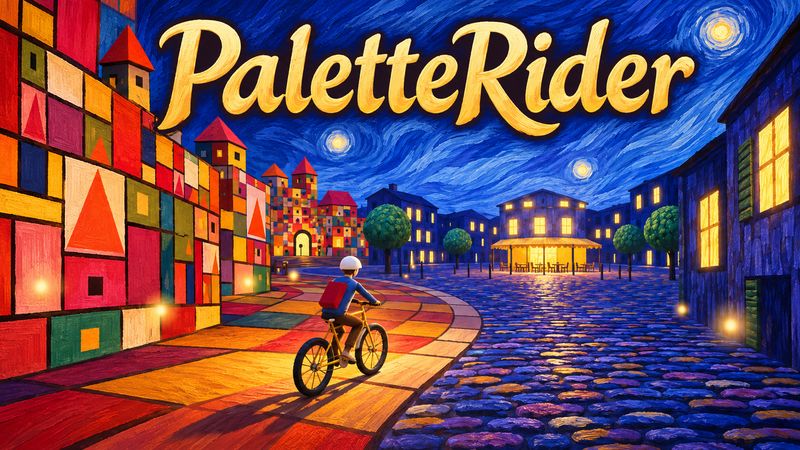
| PaletteRider | Cities, people and music generated in code; multiplayer without a server | aashishgtbit/PaletteRider | No license file |
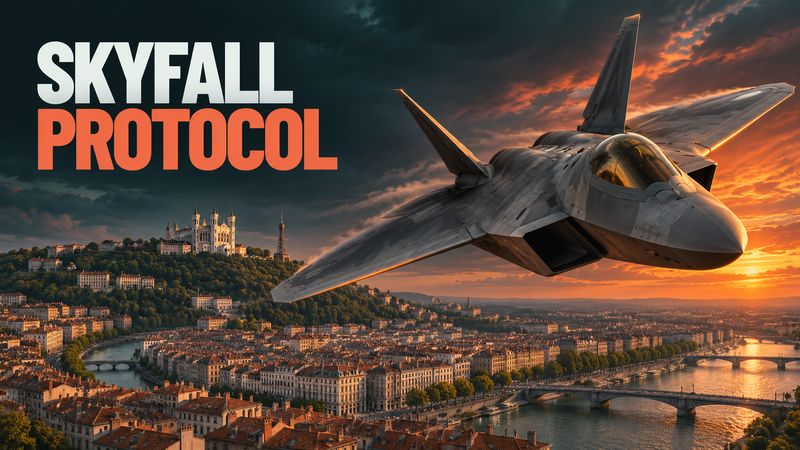
| Skyfall Protocol | Streaming a photoreal city as 3D Tiles on WebGPU | a7ul/skyfall | No license file |
A public repository with no license file lets you read the code, but gives you no right to reuse it.
Cayley: a flight simulator in plain JavaScript
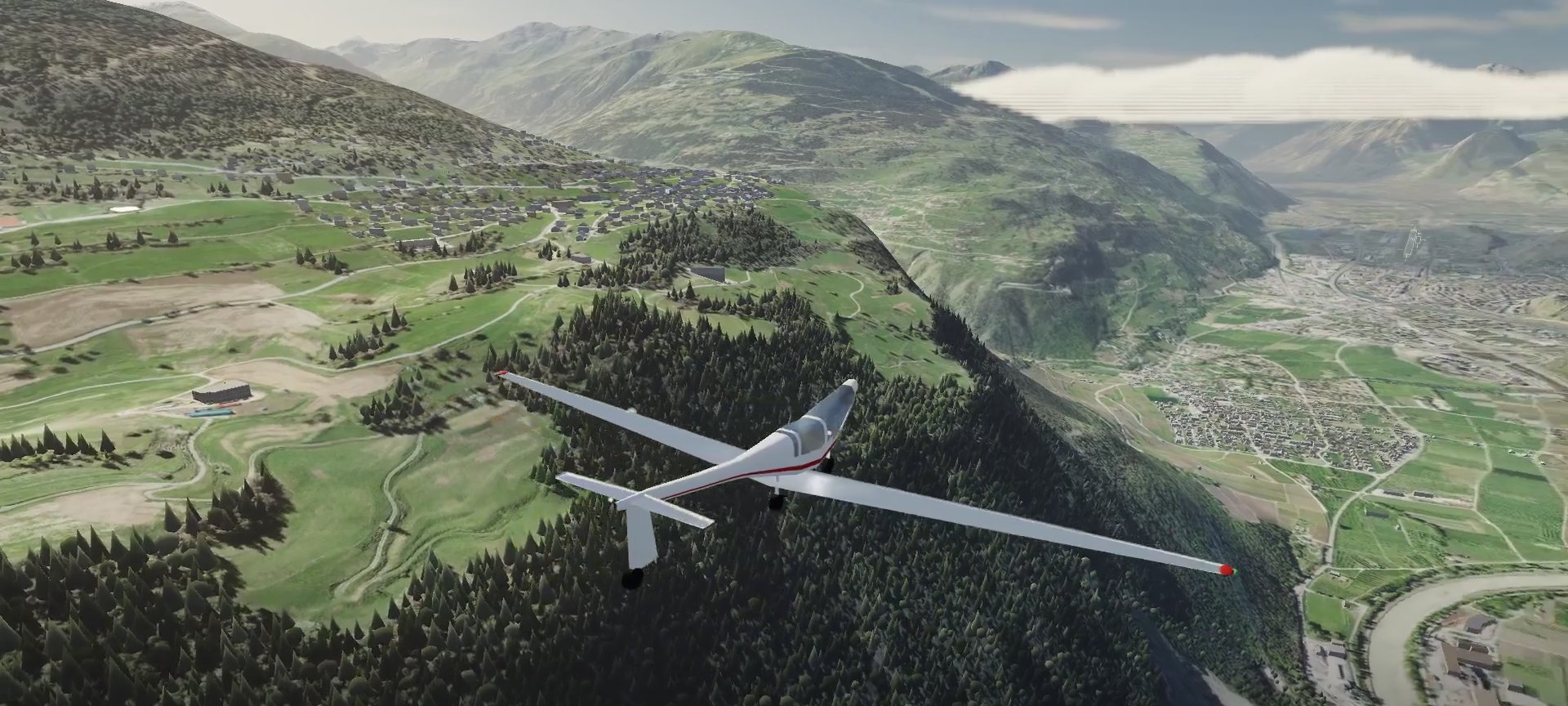
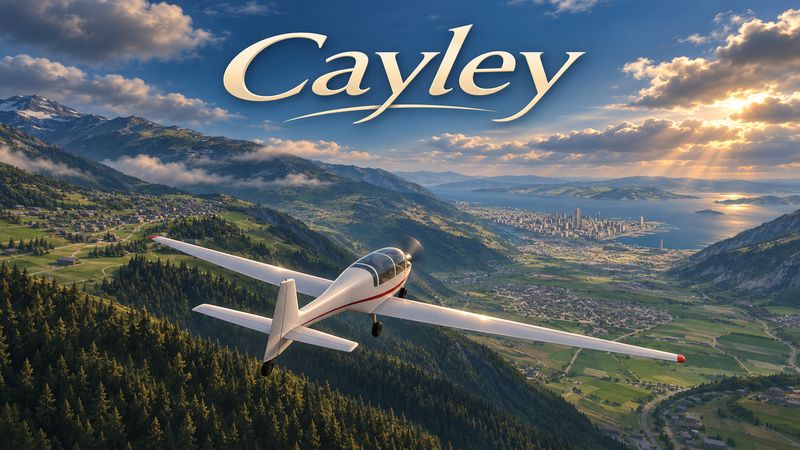
A flight simulator with real wing physics: nine real aircraft, any airport in the world, real elevation and satellite imagery, live weather. Lionel Mora says Claude Fable 5.2 wrote it overnight.
What to look at in the code:
- No build step. It is a static site: three.js (r184) is vendored in a
vendor/folder, and you run it with any web server. A good example if you want three.js without a bundler. - The flight model (
js/fdm.js): a 6-degrees-of-freedom rigid body stepped at 240 Hz, with the wing split into 40 strips and the propeller simulated blade by blade. The README says it takes about a quarter of a millisecond a frame. - Streamed terrain (
js/terrain.js): a quadtree of map tiles around the aircraft, with real elevation under satellite imagery, and buildings from OpenStreetMap vector tiles. - Sound made in code (
js/engine-worklet.js), synthesised sample by sample, and tests that run with Node and no packages.
Play: lauramionel.github.io/cayley-flight-simulator · Source: GitHub · MIT
Baron: a cartoon look with no asset files
A cartoon biplane game: build a plane in the hangar, then take off, fly and land over a world generated from a seed. Built by Dai Studio with TypeScript, three.js (WebGL 2) and Vite; the commits are co-authored by Claude Opus 5.5.
What to look at in the code:
- The cartoon look (
src/render): a toon material with rim light, inverted-hull outlines and a depth-edge ink pass, followed by FXAA. - An endless world (
src/world): seeded random numbers and noise, terrain built in web workers in chunks, with rings of detail around the plane. - Everything in code. The README says all art and audio are generated in code, with no external asset files, and sound uses the Web Audio API.
- Good habits for a game project: a fixed 120 Hz game loop, Vitest tests for world determinism and the flight model, a
?debugtuning panel, and an installable app that works offline.
Play: baron.by.dai.studio · Source: GitHub · BSD-2-Clause

The Lost Storm: an RPG with the game separate from the graphics
An isometric action RPG: wake in the mist, fight with skills on a hotbar, pick up loot that drops as real 3D models. Mark Arguinbaev builds it on livestreams with Claude Fable 5.2. The README says it uses three.js, TypeScript and Vite with no game engine on top.
What to look at in the code:
- Simulation apart from rendering. The game itself (combat, skills, monsters, pathfinding, loot, saving) is in
sim/as plain TypeScript with no three.js and no DOM, so it runs and is tested in Node. three.js only lives insrc/render/: the isometric camera, lighting, ground, effects and weather. - Content as data. Skills, monsters, items, the skill tree and each zone are JSON files in
data/, checked at start-up. - Shipping to game portals: build scripts that make offline versions for itch.io-style hosts, and an optional server for cloud saves and a shared hub.
Play: theloststorm.com · Source: GitHub · MIT
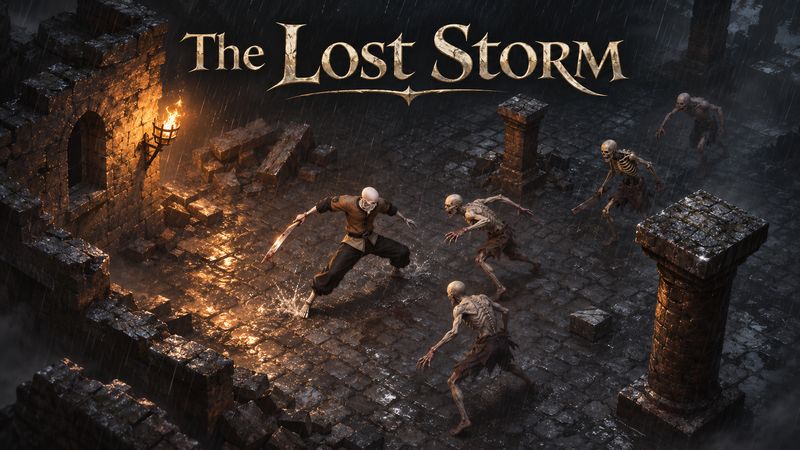
An isometric dark-fantasy action RPG in the browser, in open alpha: wake in the mist, fight through rain-slick ruins and collect loot with legendary powers. Built in three.js with Claude Fable 5.2 and streamed live.
Valley Ride: three.js on WebGPU
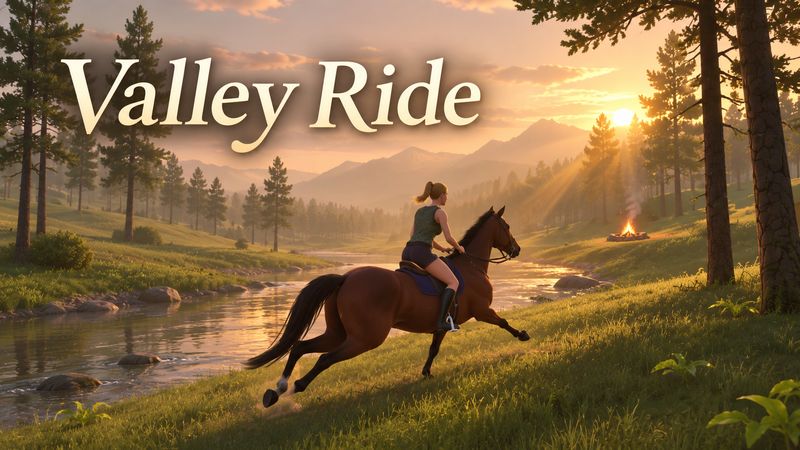
A calm horse ride along a 2.5 km trail to a campfire at sunset. Prasenjit built it in two days with Claude Code, using Claude Opus 5.5 for most of it and Claude Fable 5.2 for the rider, and the horse and trees in Blender.
What to look at in the code:
- WebGPU with a fallback. It renders with three.js (r187, its only runtime dependency) on WebGPU, and the URL option
?webgl=1switches to WebGL 2. The README says only Chrome on Windows was tested. - Lots of plants, fast: grass as instanced blades near the camera, and trees with three levels of detail repacked into instanced meshes as you move.
- Asset compression: KTX2 and WebP textures and meshopt-compressed meshes. Even so, the first visit downloads about 74 MB.
- Quality presets and GPU checks: low to ultra presets, and scripts that drive Chrome on the GPU and fail on a dropped frame or a shader compile. The prompts used are in
PROMPTS.md.
Play: starknightt.github.io/valley-ride · Source: GitHub · MIT
Castle Valley: a painterly renderer
A first-person walk out of a dark forest toward a castle, torch and sword in hand, fighting goblins and trolls, with the whole world painted in oil brush strokes. Tommy D. Rossi says Claude Fable 5.2 made it.
What to look at in the code:
- Paint without a filter. The README explains that the world is made of about 2.5 million instanced cards, each one brush mark pinned to a point in 3D, over flat-coloured geometry that fills the gaps. Because a dab never moves, the paint stays on things as you walk.
- A brush sheet made in code (
src/brush.ts) and colour ramps measured from a reference video (src/paint.ts). - Level of detail for strokes: far away, fewer and larger dabs, chosen by a fixed rank so strokes never swap.
- A final pass (
src/main.ts): colour grade, canvas weave and a little varnish.
Play: omw-game.kimaki.dev · Source: GitHub · No license file
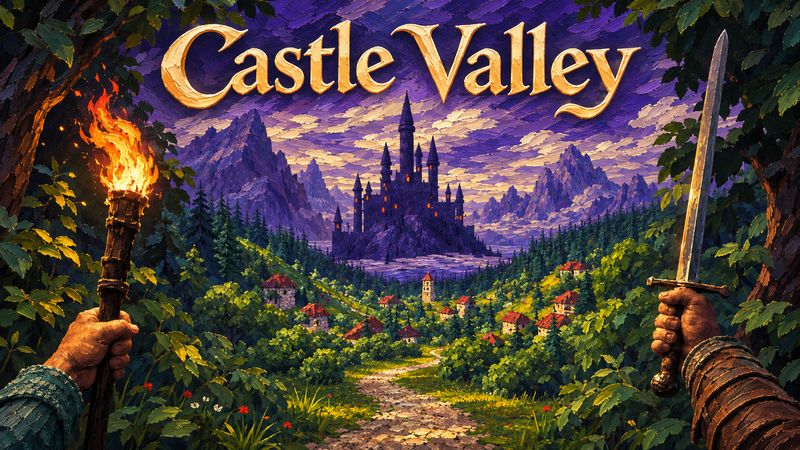
A first-person fantasy walk painted in oil brush strokes: torch in one hand, sword in the other, you leave a dark forest for a village under a castle and fight goblins and trolls on the way. Tommy D. Rossi says Claude Fable 5.2 made it; it is open source.
PaletteRider: whole cities from code
Ride a bicycle inside famous paintings, from Paul Klee's Castle and Sun to Van Gogh's Café Terrace at Night and Monet's garden at Giverny. Aashish Tiwari says it was built with Claude Fable 5.2, from the 3D cities to the music.
What to look at in the code:
- Procedural content: three.js and Vite in plain JavaScript, with the cities, people, music and sound generated in code. The only image files are the paintings.
- A real valley from open data: the Swiss chapter is baked from OpenStreetMap and elevation tiles by Python scripts in
tools/lauterbrunnen/. - Multiplayer without a game server (
src/net.js): each browser sends its rider's position a few times a second to a public message relay over WebSocket and listens for the others.
Play: aashishgtbit.github.io/PaletteRider · Source: GitHub · No license file
Skyfall Protocol: a photoreal city on WebGPU
Fly one of seven modern jets over a textured 3D copy of Lyon, in a four-act mission or free flight. The README says the game was directed and play-tested through prompts, without the maker reading the code.
What to look at in the code:
- three.js's WebGPU renderer, with no WebGL fallback, so it needs desktop Chrome with WebGPU.
- 3D Tiles streaming: the city is the Métropole de Lyon 2023 photomesh, loaded with 3D Tiles Renderer, with more detail near the aircraft.
- Local map storage: you download the map pack once and pick its folder; the game reads it with Chrome's File System Access API and caches prepared tiles in IndexedDB.
- Licenses to watch: the aircraft models are third-party assets under noncommercial licenses, and the repository has no license file.
Play: atulr.com/skyfall · Source: GitHub · No license file
More open three.js games
Blendi's painted games, Oil Paint, Painted Valley, Patchwork Quilt, Watercolour and Small Magic, are open on patch.gg rather than GitHub; they are covered in our open source browser games list. For three.js games without public code, see every game made with three.js and our list of WebGL games. To make your own, read how to make a 3D browser game with Claude Fable 5.2 and three.js.
FAQ
Where are the official three.js examples?
At threejs.org/examples. They are short demos grouped into sections such as WebGL, WebGPU, WebXR and physics, each with a "View source" link. They are the best reference for one feature at a time; the games above show how those features fit together in a full project.
Can I copy code from these games?
Only as each license allows. MIT and BSD-2-Clause let you reuse the code, including commercially, if you keep the copyright notice. Castle Valley, PaletteRider and Skyfall Protocol have no license file, so you can read them but not reuse them. Assets can have their own terms: Skyfall's aircraft models are noncommercial.
Which one should a beginner read first?
Cayley if you want three.js with no bundler, and Baron or The Lost Storm if you want to see how a TypeScript game project is organised. The Lost Storm's split between game logic and rendering is worth copying in any game.
Do these need WebGPU?
Skyfall Protocol does, and Valley Ride uses it by default. The other five run on WebGL 2, which every modern browser supports.
Were they really made with AI?
That is what each maker says in their own post or README. Valley Ride's README, for example, names Claude Opus 5.5 and Claude Fable 5.2 and includes the prompts.
Repositories, READMEs and licenses checked on 21 November 2026. Games, code and screenshots belong to their makers. three.js is an open-source project by its contributors; VibeGamer is independent and not affiliated with it or with any game here.