Along the River During the Qingming Festival: I Run a Street Stall in Bianjing (清明上河图:我在汴京摆地摊) is a small management game set in Bianjing, the Northern Song capital painted in the famous scroll. According to China Youth Daily, it was made by Qu Yongxu, a 22-year-old university student who had never studied programming, by vibe coding: describing what he wanted in plain language and letting AI write the code. More than 600,000 people have played it.
It runs inside Xiaohongshu (RedNote), not on VibeGamer, so there is no play button for it on this page. Everything below comes from published reports and, where we say so, the maker's own Xiaohongshu posts.
Quick answers
| Question | Answer |
|---|---|
| Full name | 清明上河图:我在汴京摆地摊 |
| What it is | A Song-dynasty street-stall management game |
| Where to play | Inside a Xiaohongshu post: open the post and play. The maker's own posts say it lives in Xiaohongshu's mini tools (小红书小工具) |
| Download? | Reports say no separate app is needed; we found no standalone download |
| Who made it | Qu Yongxu, a final-year materials chemistry student at China University of Petroleum (East China); his Xiaohongshu name is 赛博曲奇 |
| How | He talked to AI in plain language; AI wrote the code, he judged and changed it |
| Players | 172,000 recorded in the first ten days; over 600,000 by mid-November, per China Youth Daily |
What you do in it
China Youth Daily describes it like this: open a post and Bianjing spreads across the screen, with people crossing the Rainbow Bridge and peddlers carrying goods. You set up a stall, buy stock, set prices, call out to customers and haggle with buyers of different social standing.
The setting leans on historical sources. The Rainbow Bridge and the city gates follow the painting. Song-era terms such as goulan wasi (entertainment quarters) and yaren (brokers) open a short historical note when you tap them. The auction mode is based on changyi, a public bidding custom he and the AI found in Dongjing Meng Hua Lu, a memoir of the Song capital. Players then asked for more: a courtyard house was added, and a guofeng musician named Junruo wrote the music.
Tips, as far as the reports go
We found no full guide from the maker. What the reports confirm:
- Craftsmen, commoners and wealthy households have different spending power, so the same price sends some away and suits others.
- The higher your price, the less likely customers are to buy. The range follows Northern Song income levels.
- Tap unfamiliar Song-era words for their history.
- There is an auction mode based on changyi.
He also paid for a "Bianjing business contest" himself this year, and more than 500 players signed up.
Updates from the maker's own posts
These come from the maker's own Xiaohongshu posts, not from the reports:
- 10 September: version 1.2 came out. A later post said the game had passed 500,000 users.
- From 14 October: a limited-time tie-in with 开封直播间 (a Kaifeng livestream channel) to collect new beads.
- 29 October: an update added four mini-games: fishing on the Rainbow Bridge (虹桥垂钓), cuju football at the city gate (城门蹴鞠), stacking bowls in the entertainment quarter (瓦舍叠碗) and archery in the courtyard (庭院习射). You start each one by tapping the 游艺小人 (performer figure) at the matching spot on the map.
We haven't checked the rules ourselves; the in-game instructions are the final word.
Who made it and how AI was used
Qu Yongxu is a 2023-intake undergraduate in materials chemistry at China University of Petroleum (East China), with no computing background. According to his own Xiaohongshu posts, his account name there is 赛博曲奇 (roughly "Cyber Cookie"), and that is where he posts the game's updates. He started from a question about the painting: so many people in it, what were they selling and how much did they earn? Instead of an explainer, he made something to play.
According to China Youth Daily, he worked with AI in plain language and let it write the code; most of his time went into research, such as Song-era incomes for the customers' spending power. The reports don't name the AI tool, and we couldn't find it either. He told reporters that one of AI's biggest meanings is giving ordinary people a chance to make their ideas real (The Paper's repost).
The same report says Xiaohongshu now has more than 45,000 "guofeng vibe coding" works (traditional-Chinese-style projects made with AI), with close to 400 million topic views.
Similar games you can play in a browser
If you like running a shop and living a small life in a game, these open in your browser on VibeGamer with nothing to install.
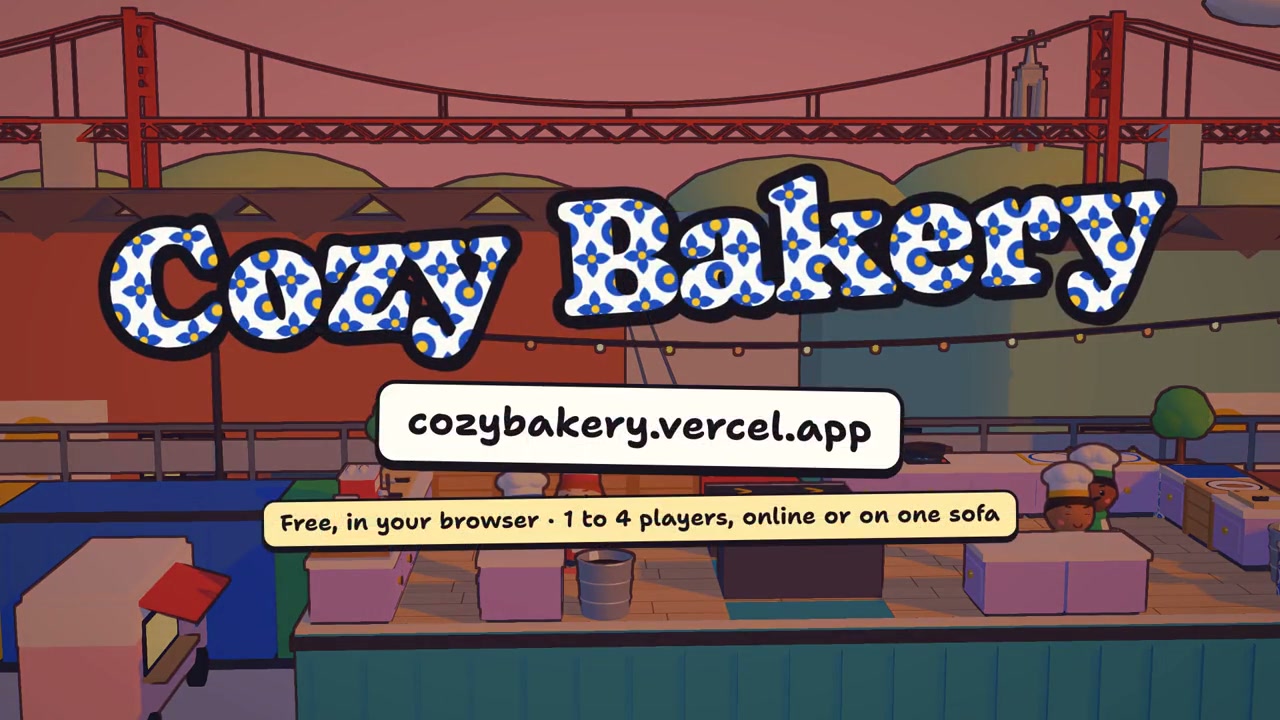
Cozy Bakery: an Overcooked-style co-op cooking game set in Portugal for 1 to 4 players, made with Claude Fable 5.2.
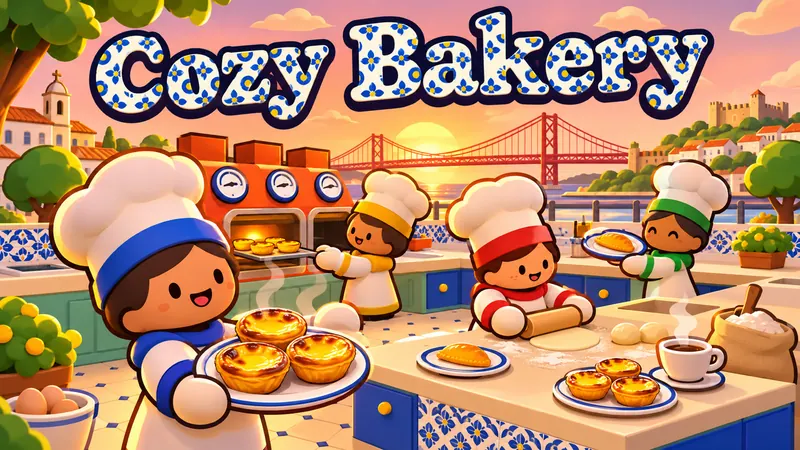
An Overcooked-style co-op cooking game around Portugal, 1 to 4 players, works on mobile
Malaysia Lepak City: a multiplayer open world in Kuala Lumpur where you can run a mamak stall with friends, flip roti and deliver orders, on a clock synced to real Malaysian time.
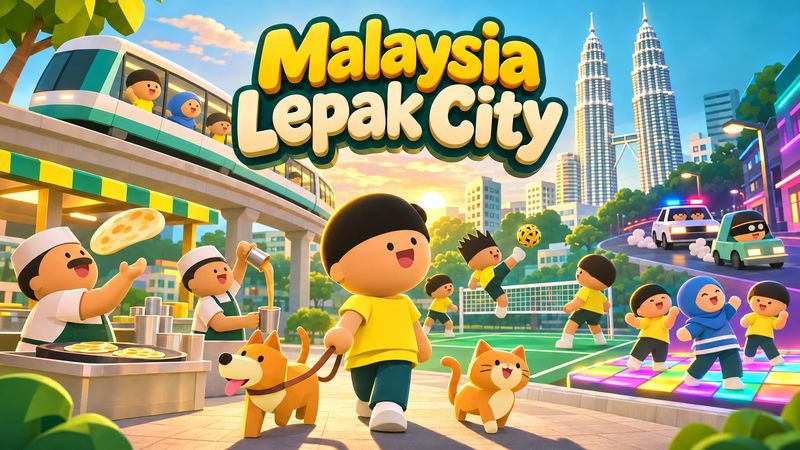
A free multiplayer open world set in Kuala Lumpur: ride the monorail past KLCC, adopt a cat or dog, decorate your flat, run a mamak stall with friends, play sepak takraw and try to outrun the police. Plays in the browser on PC and phones.
1 in 8 Billion: the life simulator Chinese players call the "random reincarnation game": be born at random by real statistics and live a whole life. Made with Claude.

Be born at random as one of the babies coming into the world right now and live one whole life, with real statistics from 172 countries deciding where you start. The viral free life simulator, made with Claude, that Chinese players call the "random reincarnation game".
More in cozy browser games, AI games for your phone and games made with Claude.
FAQ
Where can I play the Bianjing street stall game?
Inside Xiaohongshu. Reports say you open the post and play, with no extra app to download. Search the full Chinese name, 清明上河图:我在汴京摆地摊, in Xiaohongshu. According to the maker's own posts, the game lives in Xiaohongshu's mini tools (小红书小工具), and his posts carry the hashtags #我在小红书做游戏 and #国风vibecoding.
Is there a download or web version?
We found no standalone download and no web version published by the maker. If you see files calling themselves a download version, we found nothing linking them to the maker.
Is there a web version, and what if it won't open?
We found no web version published by the maker. His own Xiaohongshu posts put the game in Xiaohongshu's mini tools, so you play it inside the Xiaohongshu app. Searches on Xiaohongshu for the game include 网页版 (web version), ios, app and 打不开 (won't open), so many people are looking for a way to play outside the phone app, but we found no other way in from the maker. If it won't open, try opening it again from the maker's post (account 赛博曲奇) inside the Xiaohongshu app; beyond that, the sources we found don't say more, so we can't advise further. For links that call themselves a web version, we found nothing linking them to the maker.
Does it have ads?
The reports we read don't mention ads, so we can't say.
Was it really made with AI?
According to China Youth Daily, the maker described what he wanted to AI in plain language, the AI wrote the code and he judged and changed it. The reports don't say which AI tool.
Checked on 21 November 2026. Player numbers come from China Youth Daily and the maker's own Xiaohongshu posts and will change. The game belongs to its maker; VibeGamer is not affiliated with the maker or Xiaohongshu.