Claude Code (Anthropic) and Codex (OpenAI) are the two coding agents most people use to make games right now. Both write files, run commands, connect to MCP servers and work in the terminal, an editor, a desktop app and the cloud. Both start at $20 a month. So the choice is less about features than about plans, models and how each one lets the agent test the game it is building.
Short version: for a browser game, either one works, and many makers use both. Claude Code has far more finished games behind it on VibeGamer and the most examples of long, unattended builds (with Claude Fable 5.2). Codex has a free tier to try it, an open-source CLI, and a built-in browser in its desktop app. At the top end the per-token prices are identical. We have not found evidence that one makes better games than the other, and we don't declare a winner.
Every price, plan and feature below was checked on the vendors' own pages on 26 November 2026. Game counts come from our own pages on the same day.
At a glance
| Claude Code | Codex | |
|---|---|---|
| Maker | Anthropic | OpenAI |
| Where it runs | Terminal, VS Code and Cursor, JetBrains, desktop app (macOS, Windows; Linux in beta), web at claude.ai/code, Claude iOS and Android app | Codex CLI, IDE extension (VS Code, Cursor, Windsurf), ChatGPT desktop app, ChatGPT web and mobile, Codex Cloud |
| Cheapest way in | Pro, $20 a month ($17 billed yearly). Not on the Free plan | Free ($0) and Go ($8) for light tasks with GPT-6 Luna in the desktop app, subject to rollout. Plus, $20 a month, for the full set |
| Bigger plans | Max $100 (5x Pro usage), Ultra $200 (10x Pro weekly, no 5-hour limit for verified accounts) | Pro at $100, $200 or $500 a month, currently with no five-hour limit |
| Default model | Opus 5.5 on Pro, Max, Ultra, Team, Enterprise and the API. Fable 5.2 must be picked by hand | No single default named; OpenAI recommends GPT-6.2 Astra for demanding work and GPT-6.2 Sol for everyday coding |
| Top model's API price (per 1M tokens, in / out) | Fable 5.2: $8 / $40. Opus 5.5: $4 / $20. Sonnet 5.5: $2 / $10 | GPT-6.2 Astra: $8 / $40. GPT-6.2 Sol: $2 / $10 (up to 272K input tokens) |
| Context window | 1M tokens by default for Fable 5.2, Opus 5.5 and Sonnet 5.5 | GPT-6.2 Astra 272K and Sol 500K by default in Codex; both up to 1M if you raise model_context_window |
| See and play the game | Desktop app's Browser pane starts your dev server, takes screenshots, clicks and checks after each edit; Claude in Chrome from the CLI or VS Code | Built-in browser and Computer Use in the desktop app; a cloud browser in Codex Cloud. No browser in the CLI or IDE extension |
| MCP (Blender, Unity, Godot) | Yes, claude mcp add |
Yes, codex mcp add, local (stdio) and HTTP servers |
| Skills, plugins, hooks | Skills, plugins from Anthropic's official marketplace, hooks | Skills, plugins from a directory shared with ChatGPT; plugins can carry hooks |
| Subagents | Yes, plus background agents and the Agent SDK | Yes, with custom agents in TOML files |
| Long unattended runs | Cloud sessions on the web, cloud and desktop scheduled tasks | Codex Cloud tasks keep running while your computer sleeps |
| Project instructions file | CLAUDE.md (can read an AGENTS.md instead) | AGENTS.md |
| Is the code open? | No. The GitHub repo says "All rights reserved" | The Codex CLI is Apache-2.0 on GitHub |
| Games on VibeGamer credited to the tool | 16 | 9 |
Sources: Claude Code overview, model configuration, Chrome, desktop app and plugins docs; Claude plans; Anthropic's models overview; Codex docs, pricing, models, MCP, subagents and browser pages (all now served from learn.chatgpt.com); OpenAI's API pricing; the openai/codex and anthropics/claude-code repos.
Price: what you actually pay to make a game
Subscriptions. Both start at $20 a month: Claude Pro or ChatGPT Plus. The difference is at the bottom and the top.
- Free: Codex has a Free plan and an $8 Go plan "for lightweight coding tasks", limited to GPT-6 Luna in the desktop app and subject to rollout. Claude Code is not on Claude's Free plan.
- Middle: Claude Max is $100 for five times Pro's usage. Codex Pro starts at $100 too.
- Top: Claude Ultra is $200 with ten times Pro's weekly usage. Codex Pro also comes at $200 and $500 a month.
Usage limits. Neither company publishes a fixed number for Claude Code or for Codex on Pro. Claude's plans have a 5-hour and a weekly limit (Ultra drops the 5-hour one for verified accounts). OpenAI gives ranges for Plus: about 6 to 50 local messages every five hours with GPT-6.2 Astra and 17 to 180 with GPT-6.2 Sol, and says weekly limits may also apply. Codex Pro currently has no five-hour limit.
The strongest models cost extra on the cheaper plans. On Claude Pro, Fable 5.2 is "paid with usage credits". On Max and Ultra it is included, up to half of your weekly limit. On ChatGPT Plus, GPT-6.2 Astra is included, but the message range above is small for a long game build.
API prices, if you pay per token instead (Claude Code with an API key, Codex with an API key):
| Model | Input / output per 1M tokens | Cached input |
|---|---|---|
| Claude Fable 5.2 | $8 / $40 | $0.20 |
| GPT-6.2 Astra | $8 / $40 (≤272K input); $16 / $60 above | $0.40 |
| Claude Opus 5.5 (Claude Code's default) | $4 / $20 | $0.20 |
| Claude Sonnet 5.5 | $2 / $10 | $0.10 |
| GPT-6.2 Sol | $2 / $10 (≤272K input); $4 / $15 above | $0.10 |
The two top models cost the same, and so do the two everyday models. Cached input matters for games, because an agent re-reads its own project many times during a build; at the top end, Fable 5.2's cached input costs half of GPT-6.2 Astra's. Claude's 1M context has no long-context surcharge (except on Haiku 5.5), while OpenAI charges more above 272K input tokens.
Models: what each one runs
Claude Code runs Anthropic's models only. Out of the box it uses Claude Opus 5.5. You can switch to Claude Fable 5.2 (/model fable), Anthropic's model for "demanding reasoning and long-horizon agentic work", or to Sonnet 5.5 and Haiku 5.5 for quick jobs. The docs say plainly that no plan defaults to Fable. Anthropic's own advice is to start with Opus 5.5 and move up to Fable when that is not enough. For game work, we compared those two in Claude Fable 5.2 vs Opus 5.5 for making games.
Codex runs OpenAI's models. The current ones are GPT-6.2 Astra ("for demanding work across code, apps, or research"), GPT-6.2 Sol ("for everyday coding"), GPT-6.1 Terra and GPT-6 Luna. Codex does not name one default; if you don't choose, it "uses a recommended model". OpenAI's own GPT-6.2 launch demo was a game: Meridian, a 3D racer that OpenAI says GPT-6.2 Astra built. It is on our GPT-6.2 games page.
Speed: one same-prompt test, not a benchmark
The only speed data we have is our own small test: one prompt for a 3D hover-bike game, one attempt per model, no follow-ups. GPT-6.2 Astra in Codex finished in 3.8 minutes with a 20 KB file, but drew the "3D" on a 2D canvas. Claude Fable 5.2 in Claude Code took 9.4 and 12.6 minutes over two runs and built real 3D with three.js; the run that was allowed to test itself in a browser came out clearly better. Prompt, method and all three builds: we gave Claude Fable 5.2 and GPT-6.2 the same game prompt.
That test compares two models inside two tools, once each. It says Astra in Codex was faster on a small one-file game. It does not say which tool is faster in general, and we haven't run anything bigger.
Features that matter when the agent builds a game
Letting the agent see the game. This mattered more than anything else in our test. In Claude Code, the desktop app's Browser pane "can start a dev server and open it", then takes screenshots, inspects the page, clicks and fixes what it finds, and by default does this after every edit. From the CLI or VS Code, Claude in Chrome drives your own Chrome (it needs a Pro or higher plan and the extension). In Codex, the ChatGPT desktop app has a built-in browser for your local dev server and Computer Use to click and take screenshots; Codex Cloud has a cloud browser. OpenAI's docs say the browser "isn't available in Codex CLI or the Codex IDE extension"; there you can still have Codex run headless Playwright tests.
MCP for Blender, Unity and Godot. Both are MCP clients, so the same servers work in both:
- MCP for Blender (MIT, 35,859 stars) installs in both; our Blender MCP guide has the commands.
- MCP for Unity (MIT, 16,205 stars) says it works with "Claude, Codex, VS Code, local LLMs, and more".
- Godot MCP (MIT, 6,773 stars) gives
claude mcp add godot -- npx @coding-solo/godot-mcp; with Codex's documented syntax that iscodex mcp add godot -- npx @coding-solo/godot-mcp(we did not run it).
Star counts are GitHub's on 26 November 2026. More servers and skills by engine: game dev agent skills and MCP servers.
Subagents. Both can split a job between several agents running in parallel. OpenAI's docs suggest parallel agents mostly for read-heavy work, such as exploring and testing, because agents editing the same code at once can conflict. Sumiro, below, is an example of Claude Code running several agents at once to build and test levels.
Long unattended runs. Claude Code can run as a cloud session in the browser, on a schedule in the cloud or on your desktop. Codex Cloud tasks each get their own workspace and "can keep working while your computer is asleep". Neither page gives a maximum run time.
What each has built: the games on VibeGamer
We tag a game with a tool only when its maker says which one they used. On 26 November 2026:
- Games made with Claude Code: 16, two of them our own test builds.
- Games made with Codex: 9, one of them our own test build.
- 3 games credit both tools: Inkline Town, Schnell and Wrongly Drawn.
Most makers name the model rather than the tool, so the model pages are bigger: 206 games made with Claude and 22 games made with ChatGPT and GPT. These numbers show what makers post and credit; they are not a quality ranking.
Made with Claude Code
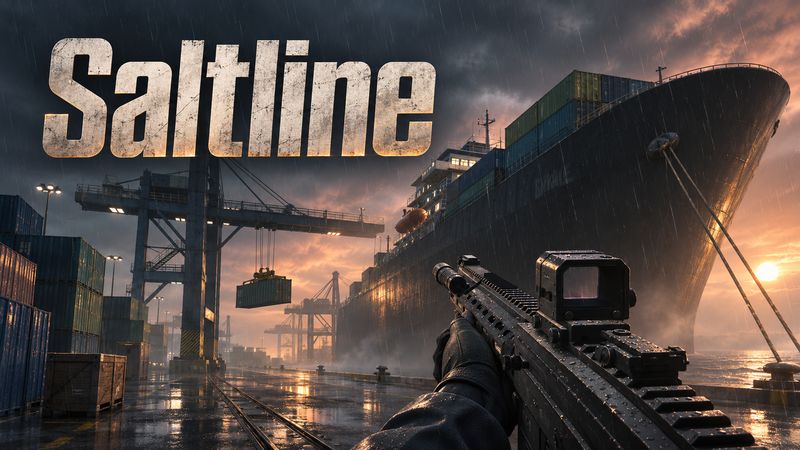
Sumiro is a 3D ink-wash platformer that Shikhar built in 24 hours, with Claude Opus 5.5 writing most of the code. Claude Code ran several agents at once to build and test each level, and he made the assets with Blender, Tripo and GPT Image.

Aiden's Revenge is the long-unattended-run example: a 1 to 4 player beat 'em up designed and drawn by a kid, finished overnight from one prompt in Claude Code with Claude Fable 5.2. The agent generated art and audio and wrote a bot to play all twelve stages.

Made with Codex
JUNKSHIFT is a four-player party game in a broken factory with seven minigames, built with Codex and GPT-6.1 Sol, Godot and Blender. Its page describes it as fully vibe coded by a non-developer.

A four-player party game in a broken factory, with seven minigames.
Neon Canyon Run (GPT-6.2 Astra) is our own test build, made in Codex in 3.8 minutes from one prompt, unchanged.

Made with both
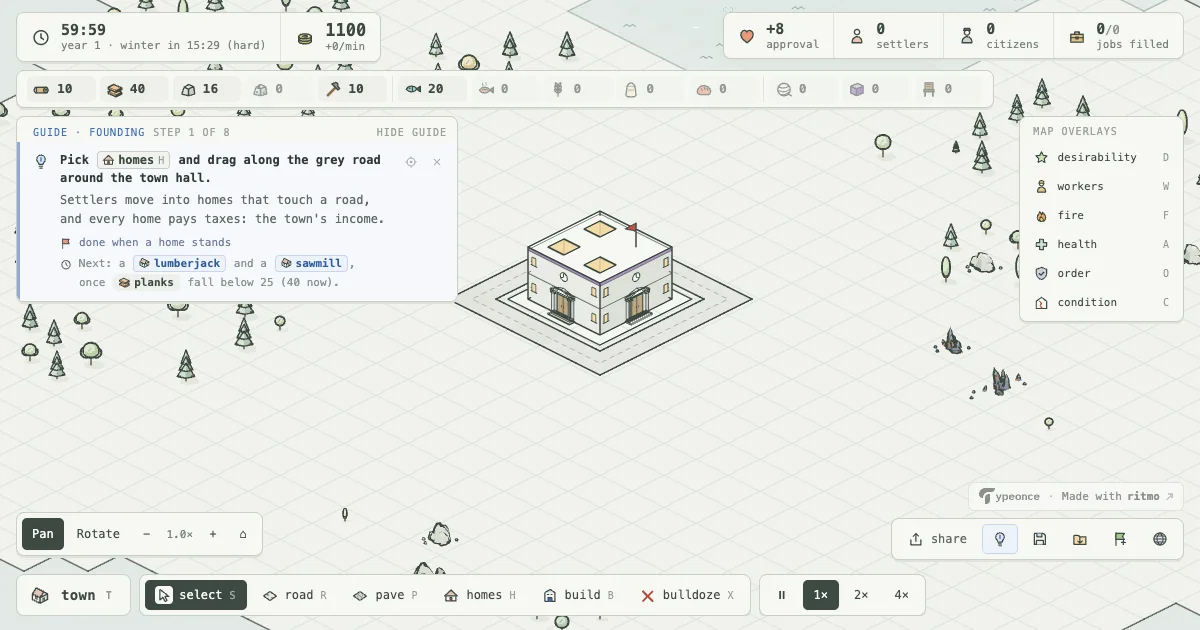
Many makers don't pick one. Sandro Maglione says Claude Code and Codex wrote all of Inkline Town's code, a 3D-outlined city builder, and that Codex also made the 149 3D models in Blender; most commits carry a Claude Opus 5.5 co-author line.

Be mayor of a growing island town for a 45 to 90 minute term, in a city builder drawn entirely in fine 3D ink outlines.
Deaddreamer wrote Schnell, a neon wireframe anti-gravity racer on three.js and Tone.js, with Claude Code and Codex. Wrongly Drawn's maker says the same: all of its code came from Claude Code and Codex.

Others split by model instead of tool. In Roadster Flight Lab, GPT 6 Astra did the 3D modelling and physics and Claude Opus 5.5 did the mechanics, controls, interface and visuals.
Which should you use to make a game?
- You're a beginner and want to try for free: Codex. It's the only one of the two with a free plan, although the free tier is limited to a small model in the desktop app. When you're ready to pay, both cost $20.
- A three.js browser game: either. Most three.js games on VibeGamer credit Claude, but Codex helped write some of them too, such as Schnell. What matters more is that the agent can open the game in a browser: use the Claude desktop app's Browser pane or Claude in Chrome, or the ChatGPT desktop app's browser for Codex. If you use GPT-6.2 Astra, ask for three.js explicitly; in our test it chose a 2D canvas. Our three.js game guide has a prompt to start from.
- Unity or Godot through MCP: either. The Unity, Godot and Blender MCP servers above all work with both. Choose by which models you prefer and which plan you already pay for.
- A long build you leave running overnight: Claude Code with Fable 5.2 has the most examples so far (Aiden's Revenge, and many of the Fable 5.2 games). On Pro, Fable costs usage credits; Max or Ultra includes it. Codex Cloud is built for the same kind of run and Codex Pro currently has no five-hour limit, but we have fewer finished games from it.
- On a tight budget: the top models cost the same per token ($8 / $40), and so do the everyday ones ($2 / $10). Claude Code's default, Opus 5.5, sits in between at $4 / $20. On a $20 plan, Codex's Plus limits for GPT-6.2 Astra are published (6 to 50 messages per five hours); Claude's are not.
- You can't decide: use both. Claude Code can read the AGENTS.md file Codex uses, so one project file can steer both, and several games above were made exactly that way.
FAQ
Can I use Claude Code and Codex on the same game?
Yes, and makers do: Inkline Town, Schnell and Wrongly Drawn were all built with both. Keep project rules in an AGENTS.md file, which Codex reads and Claude Code can read in place of a CLAUDE.md, and connect the same MCP servers to both.
Which is cheaper, Claude Code or Codex?
At $20 a month they cost the same, and Codex adds a free plan and an $8 plan. Per token, the top models (Fable 5.2 and GPT-6.2 Astra) are both $8 / $40 per million, and Fable's cached input is half of Astra's. Which costs you less depends on how much usage each plan gives you, and only OpenAI publishes ranges for that.
Which makes better 3D games?
We can't say from evidence. VibeGamer has far more 3D games credited to Claude, but far more makers use Claude, so that proves popularity, not quality. In our one same-prompt test, Claude Fable 5.2 built real 3D and GPT-6.2 Astra faked it in 2D, but that is one attempt each. Inkline Town's 149 Blender models were made by Codex.
Do they work with Blender MCP?
Yes. MCP for Blender lists both Claude Code and Codex, and its one-line installer sets up either. Step-by-step commands and a full prompt-to-GLB example: Blender MCP guide.
Is Codex open source? Is Claude Code?
The Codex CLI is open source under Apache-2.0 on GitHub (136,516 stars on 26 November 2026). Claude Code is not: its GitHub repo is public for issues and releases, but its license reads "All rights reserved" under Anthropic's Commercial Terms.
Which models does each use?
Claude Code uses Claude models: Opus 5.5 by default, Fable 5.2 when you choose it, plus Sonnet 5.5 and Haiku 5.5. Codex uses OpenAI models: GPT-6.2 Astra, GPT-6.2 Sol, GPT-6.1 Terra and GPT-6 Luna.
Plans, prices and features checked on 26 November 2026 on Anthropic's and OpenAI's own pages; they change often, so check the linked pages before you buy. Claude and Claude Code are trademarks of Anthropic; Codex, ChatGPT and GPT are trademarks of OpenAI. VibeGamer is independent and not affiliated with either.